

What is a fiber - reinforced slab?
Aug 06, 2025
A fiber-reinforced slab is a remarkable construction material that has gained significant popularity in recent years due to its numerous advantages over traditional slabs. As a slab supplier, I have witnessed firsthand the growing demand for fiber-reinforced slabs in various construction projects, from residential buildings to large-scale commercial developments. In this blog post, I will delve into what a fiber-reinforced slab is, its benefits, applications, and how it compares to other types of slabs.
What is a Fiber-Reinforced Slab?
A fiber-reinforced slab is a type of concrete slab that is reinforced with fibers to enhance its mechanical properties. These fibers can be made from various materials, including steel, glass, synthetic polymers, and natural fibers such as cellulose. The addition of fibers to the concrete mixture helps to improve its strength, durability, and resistance to cracking and impact.
The fibers are typically added to the concrete during the mixing process, where they are evenly distributed throughout the mixture. Once the concrete is poured and cured, the fibers act as a reinforcement network, helping to hold the concrete together and prevent cracks from forming. The fibers also help to improve the ductility of the concrete, allowing it to deform under stress without breaking.
Benefits of Fiber-Reinforced Slabs
There are several benefits to using fiber-reinforced slabs in construction projects. Here are some of the key advantages:
1. Increased Strength and Durability
Fiber-reinforced slabs have higher strength and durability compared to traditional concrete slabs. The fibers help to distribute the load more evenly throughout the slab, reducing the risk of cracking and failure. This makes fiber-reinforced slabs ideal for applications where high strength and durability are required, such as industrial floors, bridge decks, and high-rise buildings.
2. Improved Crack Resistance
One of the main advantages of fiber-reinforced slabs is their improved crack resistance. The fibers help to control the growth of cracks by bridging the gaps between the concrete particles, preventing them from spreading. This reduces the risk of water penetration, which can lead to corrosion of the reinforcement and deterioration of the concrete over time.
3. Enhanced Impact Resistance
Fiber-reinforced slabs are more resistant to impact and abrasion compared to traditional concrete slabs. The fibers help to absorb the energy of the impact, reducing the risk of damage to the slab. This makes fiber-reinforced slabs ideal for applications where there is a high risk of impact, such as parking lots, warehouses, and industrial facilities.
4. Reduced Maintenance Costs
Due to their increased strength, durability, and crack resistance, fiber-reinforced slabs require less maintenance compared to traditional concrete slabs. This can result in significant cost savings over the life of the structure, as there is less need for repairs and replacements.
5. Improved Aesthetics
Fiber-reinforced slabs can be finished to a high standard, providing a smooth and attractive surface. This makes them suitable for applications where aesthetics are important, such as residential floors, commercial interiors, and public spaces.
Applications of Fiber-Reinforced Slabs
Fiber-reinforced slabs are used in a wide range of construction applications, including:
1. Industrial Floors
Fiber-reinforced slabs are commonly used in industrial floors due to their high strength, durability, and resistance to impact and abrasion. They are ideal for applications where heavy machinery and equipment are used, such as factories, warehouses, and distribution centers.
2. Bridge Decks
Fiber-reinforced slabs are also used in bridge decks to improve their strength and durability. The fibers help to reduce the risk of cracking and fatigue, which can lead to premature failure of the bridge deck. This makes fiber-reinforced slabs a cost-effective solution for bridge construction and rehabilitation.
3. High-Rise Buildings
In high-rise buildings, fiber-reinforced slabs are used to provide a strong and stable foundation. The fibers help to distribute the load more evenly throughout the slab, reducing the risk of cracking and settlement. This makes fiber-reinforced slabs ideal for applications where high strength and durability are required, such as in the construction of tall buildings.
4. Residential Floors
Fiber-reinforced slabs are increasingly being used in residential floors due to their improved aesthetics and durability. They can be finished to a high standard, providing a smooth and attractive surface that is resistant to wear and tear. This makes fiber-reinforced slabs a popular choice for homeowners who want a long-lasting and low-maintenance flooring solution.
5. Public Spaces
Fiber-reinforced slabs are also used in public spaces, such as sidewalks, plazas, and parks. The fibers help to improve the strength and durability of the slabs, making them more resistant to foot traffic and environmental factors. This makes fiber-reinforced slabs a suitable choice for public spaces where safety and durability are important.
Comparison with Other Types of Slabs
Fiber-reinforced slabs offer several advantages over other types of slabs, such as traditional concrete slabs and precast slabs. Here is a comparison of fiber-reinforced slabs with these other types of slabs:

1. Traditional Concrete Slabs
Traditional concrete slabs are made from a mixture of cement, aggregates, and water. While they are strong and durable, they are prone to cracking and require regular maintenance. Fiber-reinforced slabs, on the other hand, have improved crack resistance and require less maintenance, making them a more cost-effective solution in the long run.
2. Precast Slabs
Precast slabs are manufactured off-site and then transported to the construction site for installation. While they offer several advantages, such as faster construction times and improved quality control, they can be more expensive than fiber-reinforced slabs. Fiber-reinforced slabs can be cast on-site, which can reduce the cost of transportation and installation.
Our Range of Slabs
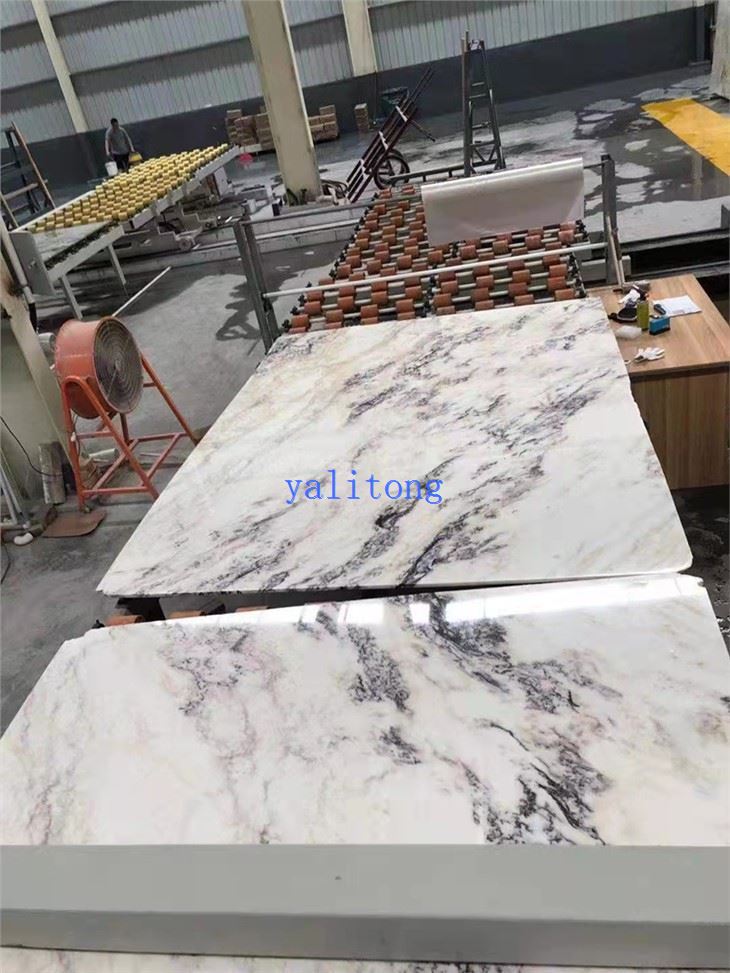
As a slab supplier, we offer a wide range of fiber-reinforced slabs to meet the needs of our customers. In addition to fiber-reinforced slabs, we also supply other types of slabs, such as China Violet Marble Slabs and Piano Grey Marble Slabs. These slabs are made from high-quality materials and are available in a variety of sizes and finishes to suit your specific requirements.
Conclusion
Fiber-reinforced slabs are a versatile and cost-effective construction material that offers several advantages over traditional concrete slabs and precast slabs. They are strong, durable, crack-resistant, and require less maintenance, making them ideal for a wide range of construction applications. As a slab supplier, we are committed to providing our customers with high-quality fiber-reinforced slabs and other types of slabs to meet their needs. If you are interested in learning more about our products or would like to discuss your specific requirements, please contact us today. We look forward to working with you on your next construction project.
References
- ACI Committee 544. (1996). State-of-the-Art Report on Fiber-Reinforced Concrete. American Concrete Institute.
- Naaman, A. E., & Reinhardt, H. W. (Eds.). (2003). Fibre-Reinforced Concrete: Design and Applications. E & FN Spon.
- Mindess, S., Young, J. F., & Darwin, D. (2003). Concrete. Prentice Hall.