

Are stone slabs resistant to chemicals?
Nov 26, 2025
Hey there, folks! As a stone slab supplier, I often get asked one question quite a bit: Are stone slabs resistant to chemicals? Well, let's dig into this topic and find out.
First off, it's important to understand that not all stone slabs are created equal when it comes to chemical resistance. There are different types of stone, and each has its own characteristics.
Granite Slabs
Granite is one of the most popular choices for stone slabs. It's a hard and dense igneous rock. In general, granite is pretty resistant to a lot of common chemicals. Acids like vinegar or lemon juice usually won't cause much damage to granite. That's because granite has a low porosity, which means there are fewer tiny holes for chemicals to seep into.
However, stronger acids, like hydrochloric acid or sulfuric acid, can etch the surface of granite over time. Etching is when the acid reacts with the minerals in the granite and causes a dull spot on the surface. So, while granite is tough, you still don't want to let strong chemicals sit on it for too long.
Marble Slabs
Marble is another well - known type of stone slab. It's a metamorphic rock, and it's a bit more delicate compared to granite. Marble is mainly composed of calcium carbonate, which makes it more susceptible to acid damage. Even weak acids can etch marble. For example, if you spill a glass of wine or a bit of citrus juice on a marble slab, you might notice a dull mark on the surface pretty quickly.
But not all chemicals are acids. Some alkaline substances can also have an impact on marble. Over time, exposure to certain alkaline cleaners might cause the surface of the marble to become dull or rough.
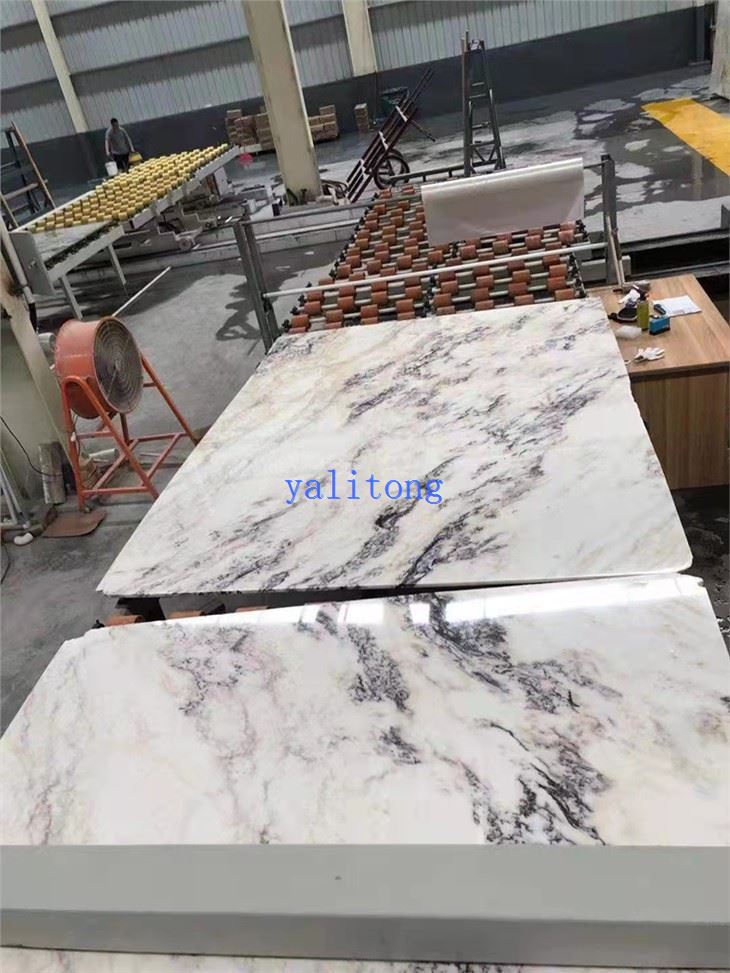
If you're interested in marble slabs, we have some great options like Piano Grey Marble Slabs and China Violet Marble Slabs. These are high - quality marble slabs that can add a touch of elegance to any space, but you need to be careful with chemical exposure.
Limestone Slabs
Limestone is a sedimentary rock. Similar to marble, it's also made up of calcium carbonate, so it has similar chemical susceptibility. Limestone is more porous than granite, which means it can absorb chemicals more easily. Even water can cause problems if it contains certain minerals or chemicals. Acid rain, for example, can be very damaging to limestone slabs.
Quartzite Slabs
Quartzite is a metamorphic rock that's composed mainly of quartz. It's very hard and has excellent chemical resistance. It can withstand a wide range of chemicals, including acids and alkalis. Quartzite is a great option if you're looking for a stone slab that can handle tough chemical environments, like in a commercial kitchen or a laboratory.
Factors Affecting Chemical Resistance
Besides the type of stone, there are other factors that can affect a stone slab's chemical resistance.
Sealing
Sealing is a process where a protective layer is applied to the surface of the stone slab. Sealing can significantly improve a stone's resistance to chemicals. For porous stones like marble and limestone, sealing is especially important. A good sealant can prevent chemicals from penetrating the surface of the stone. However, the sealant needs to be reapplied periodically, usually every one to three years, depending on the type of stone and the amount of use.

Finish
The finish of the stone slab also matters. A polished finish can be more resistant to chemicals in some cases because it creates a smooth, non - porous surface. On the other hand, a honed finish might be more prone to chemical damage because it has a slightly rougher surface that can trap chemicals.
Thickness
Thicker stone slabs are generally more resistant to chemical damage. A thicker slab has more material to withstand the chemical reaction, and it's less likely to be completely penetrated by chemicals.
Maintaining Chemical Resistance
If you want your stone slabs to stay resistant to chemicals for as long as possible, here are some tips:
Clean Spills Immediately
Don't let spills sit on the stone surface. Whether it's a drink, a cleaning product, or any other chemical, wipe it up as soon as you notice it. This can prevent the chemical from having enough time to react with the stone.
Use the Right Cleaners
When cleaning your stone slabs, use cleaners that are specifically designed for that type of stone. For example, use a pH - neutral cleaner for marble and limestone to avoid acid or alkaline damage.
Avoid Abrasive Materials
Don't use abrasive sponges or brushes on your stone slabs. These can scratch the surface, which can make the stone more vulnerable to chemical damage.
Conclusion
So, to answer the question "Are stone slabs resistant to chemicals?", it depends on the type of stone. Some stones, like quartzite and granite, are more resistant, while others, like marble and limestone, are more susceptible. But with proper sealing, maintenance, and care, you can improve a stone slab's chemical resistance and make it last a long time.
If you're in the market for stone slabs, whether it's for your home, a commercial project, or anything else, we're here to help. We offer a wide range of high - quality stone slabs, and our team can provide you with all the information you need to choose the right stone for your needs. If you have any questions or want to discuss your requirements, feel free to reach out to us for a procurement discussion.
References
- "Stone Technology and the Conservation of Stone Monuments" by Luís F. C. Silva
- "Building Stone and Architectural Masonry" by William Henry Wheeler