

Are stone slabs fire - resistant?
May 26, 2025
As a stone slab supplier, I often encounter inquiries from customers regarding the fire - resistant properties of our products. This topic is of great significance, especially for those who are considering using stone slabs in areas where fire safety is a primary concern, such as kitchens, commercial buildings, and public spaces. In this blog, I will delve into the question: Are stone slabs fire - resistant?
Understanding Fire Resistance
Before we discuss the fire - resistant properties of stone slabs, it's essential to understand what fire resistance means. Fire resistance refers to a material's ability to withstand fire or high temperatures without losing its structural integrity or releasing harmful substances. Materials with high fire resistance can act as a barrier, slowing down the spread of fire and providing valuable time for evacuation and firefighting.
Types of Stone Slabs and Their Fire - Resistant Characteristics
Granite Slabs
Granite is one of the most popular choices for stone slabs due to its durability and aesthetic appeal. Granite is a natural igneous rock formed from the cooling and solidification of magma. It has a high melting point, typically around 1215 - 1260°C (2219 - 2300°F). This high melting point makes granite highly resistant to fire.
In a fire situation, granite slabs can withstand high temperatures for an extended period without significant damage. They do not burn, emit toxic fumes, or contribute to the spread of fire. However, it's important to note that extreme and sudden temperature changes can cause granite to crack. For example, if a hot pan is placed directly on a cold granite countertop, thermal shock can occur, leading to cracks.
Marble Slabs
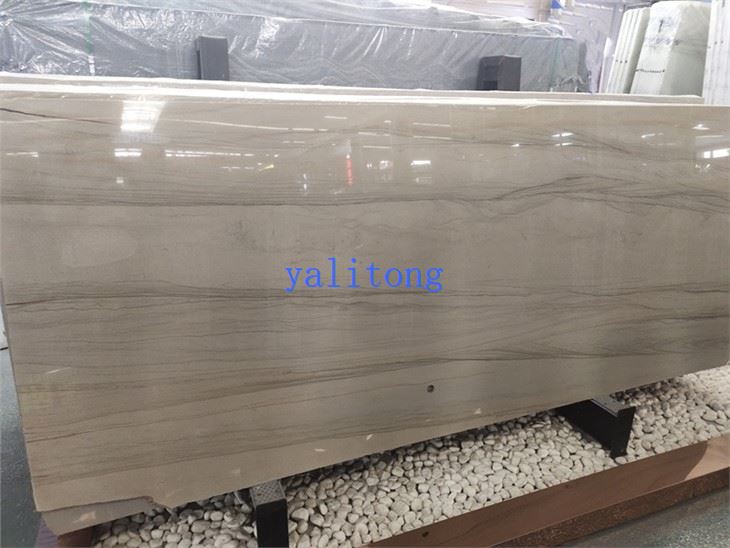
Marble is a metamorphic rock composed mainly of calcite or dolomite. Piano Grey Marble Slabs and China Violet Marble Slabs are among the many types of marble slabs available in the market. Marble has a relatively lower melting point compared to granite, usually around 820 - 910°C (1508 - 1670°F).
While marble is not as heat - resistant as granite, it still offers a certain degree of fire resistance. It does not burn and can withstand moderate heat. However, when exposed to high - intensity fires, marble can undergo a process called calcination, where the calcite in the marble decomposes into calcium oxide and carbon dioxide. This can cause the marble to lose its strength and integrity over time.
Limestone Slabs
Limestone is a sedimentary rock composed mostly of calcium carbonate. It has a melting point similar to marble, around 825 - 900°C (1517 - 1652°F). Limestone slabs can resist fire to some extent, but they are more vulnerable to heat - related damage compared to granite. When heated, limestone can experience spalling, which is the breaking or flaking of the surface layer. This can expose the underlying layers to further heat and damage.
Factors Affecting the Fire Resistance of Stone Slabs
Mineral Composition
The mineral composition of a stone slab plays a crucial role in its fire - resistant properties. As mentioned earlier, granite, which is rich in quartz and feldspar, has a higher melting point and is more fire - resistant compared to marble and limestone, which are mainly composed of calcite or dolomite.
Density and Porosity
Dense and non - porous stone slabs tend to be more fire - resistant. A high - density stone has fewer voids and pores, which means there is less space for heat to penetrate and cause damage. Porous stones, on the other hand, can absorb heat more quickly and may be more prone to cracking and spalling.
Installation and Maintenance
Proper installation and maintenance also affect the fire resistance of stone slabs. If a stone slab is not installed correctly, it may have gaps or weak points that can allow heat to penetrate more easily. Regular maintenance, such as sealing the stone to reduce porosity, can help improve its fire - resistant properties.

Testing and Certification
To ensure the fire - resistant properties of stone slabs, various testing methods are available. These tests evaluate the stone's ability to withstand high temperatures, resist fire spread, and maintain its structural integrity. Some common fire - resistance tests include the ASTM E119 test, which measures the time a material can withstand a standard fire exposure while still providing structural support.
Many stone slab suppliers, including ourselves, provide fire - resistance certifications for their products. These certifications give customers peace of mind, knowing that the stone slabs they are purchasing meet the necessary fire - safety standards.
Applications of Fire - Resistant Stone Slabs
Kitchen Countertops
In kitchens, fire - resistant stone slabs are highly desirable. They can withstand the heat from hot pots and pans, as well as the occasional accidental flame from a stove. Granite and marble are popular choices for kitchen countertops due to their fire - resistant properties and aesthetic appeal.
Commercial Buildings
Commercial buildings, such as offices, hotels, and restaurants, require materials that meet strict fire - safety regulations. Fire - resistant stone slabs can be used for flooring, wall cladding, and other interior applications to enhance the building's fire safety.
Public Spaces
In public spaces like airports, shopping malls, and museums, fire - resistant stone slabs are essential for protecting the safety of the public. They can be used to create fire - resistant barriers and partitions, helping to contain fires and prevent their spread.
Conclusion
In conclusion, stone slabs can offer varying degrees of fire resistance depending on their type, mineral composition, density, and porosity. Granite is generally the most fire - resistant, followed by marble and limestone. While stone slabs are not completely immune to fire damage, they can provide a significant level of protection in a fire situation.
If you are considering using stone slabs for your project and are concerned about fire safety, I encourage you to contact us for more information. Our team of experts can help you choose the right type of stone slab based on your specific needs and requirements. We are committed to providing high - quality, fire - resistant stone slabs that meet the highest industry standards. Whether you are interested in Piano Grey Marble Slabs or China Violet Marble Slabs, we have a wide range of options to suit your taste and budget.
Don't hesitate to reach out to us to start a conversation about your stone slab procurement. We look forward to working with you on your next project.
References
- ASTM International. (2023). ASTM E119 - 22a: Standard Test Methods for Fire Tests of Building Construction and Materials.
- Norton, F. H. (1974). Elements of Ceramics. Addison - Wesley.
- Wills, R. E. (1996). Engineering Geology: Principles and Practice. Chapman & Hall.