

Are Quartz Tiles scratch - resistant?
May 20, 2025
As a supplier of quartz tiles, I often encounter inquiries from customers about the scratch-resistant properties of these tiles. Quartz tiles have gained significant popularity in recent years due to their aesthetic appeal, durability, and low maintenance requirements. However, the question of whether they are truly scratch-resistant is a crucial one for many potential buyers, especially those considering using them in high-traffic areas.
Understanding Quartz Tiles
Quartz tiles are engineered stone products that are primarily composed of quartz crystals, which are one of the hardest minerals on Earth. These crystals are combined with resins, pigments, and other additives to create a solid, non-porous surface. The manufacturing process involves compressing the materials under high pressure and heat, resulting in a dense and durable tile.
The high quartz content in these tiles gives them several desirable properties, including resistance to stains, chemicals, and heat. But when it comes to scratch resistance, the performance can vary depending on several factors.
Factors Affecting Scratch Resistance
Quartz Content
The percentage of quartz in the tile is a significant factor in determining its scratch resistance. Tiles with a higher quartz content (typically 90% or more) are generally more scratch-resistant than those with a lower quartz content. This is because quartz is extremely hard, with a Mohs hardness rating of 7, which means it can withstand scratches from most common household items.
Surface Finish
The surface finish of the quartz tile also plays a role in its scratch resistance. Polished finishes are more prone to showing scratches because they have a smooth, reflective surface that makes any imperfections more visible. On the other hand, honed or textured finishes can be more forgiving as they tend to hide scratches better.
Installation and Maintenance
Proper installation and maintenance are essential for ensuring the long-term scratch resistance of quartz tiles. During installation, it is crucial to use the correct adhesive and ensure that the tiles are properly aligned and leveled. Any unevenness in the installation can cause stress points on the tiles, making them more susceptible to scratching.
In terms of maintenance, using the right cleaning products is vital. Abrasive cleaners or tools can scratch the surface of the tiles, so it is recommended to use mild, pH-neutral cleaners and soft cloths or mops.
Testing Scratch Resistance
To determine the scratch resistance of quartz tiles, various testing methods are used. One common method is the Taber Abraser test, which involves rotating a sample of the tile against an abrasive wheel under a specific load for a set number of cycles. The amount of material removed during the test is then measured, and the results are used to evaluate the tile's scratch resistance.
Another method is the Mohs hardness test, which involves using a series of minerals with known hardness values to scratch the surface of the tile. If a mineral cannot scratch the tile, it means the tile has a higher hardness than that mineral.
Real-World Performance
In real-world applications, quartz tiles generally perform well in terms of scratch resistance. They can withstand normal foot traffic, furniture movement, and the occasional dropped object without showing significant scratches. However, in high-traffic commercial areas or homes with pets and children, some scratching may occur over time.
For example, in a busy restaurant kitchen, the constant movement of heavy equipment and the dropping of utensils can potentially cause scratches on the quartz tiles. Similarly, in a household with active pets, the claws of the animals can leave marks on the tile surface.
Comparing Quartz Tiles with Other Materials
When compared to other flooring and countertop materials, quartz tiles offer excellent scratch resistance. For instance, compared to natural stone such as marble or granite, quartz tiles are generally more scratch-resistant. Marble has a Mohs hardness rating of around 3-4, which means it is much softer and more prone to scratching. Granite, on the other hand, has a hardness rating similar to quartz but can still be scratched by very hard objects.
Laminate flooring is another popular option, but it is generally less scratch-resistant than quartz tiles. Laminate can easily be scratched by sharp objects or heavy furniture, and the scratches can be difficult to repair.
Our Quartz Tile Offerings
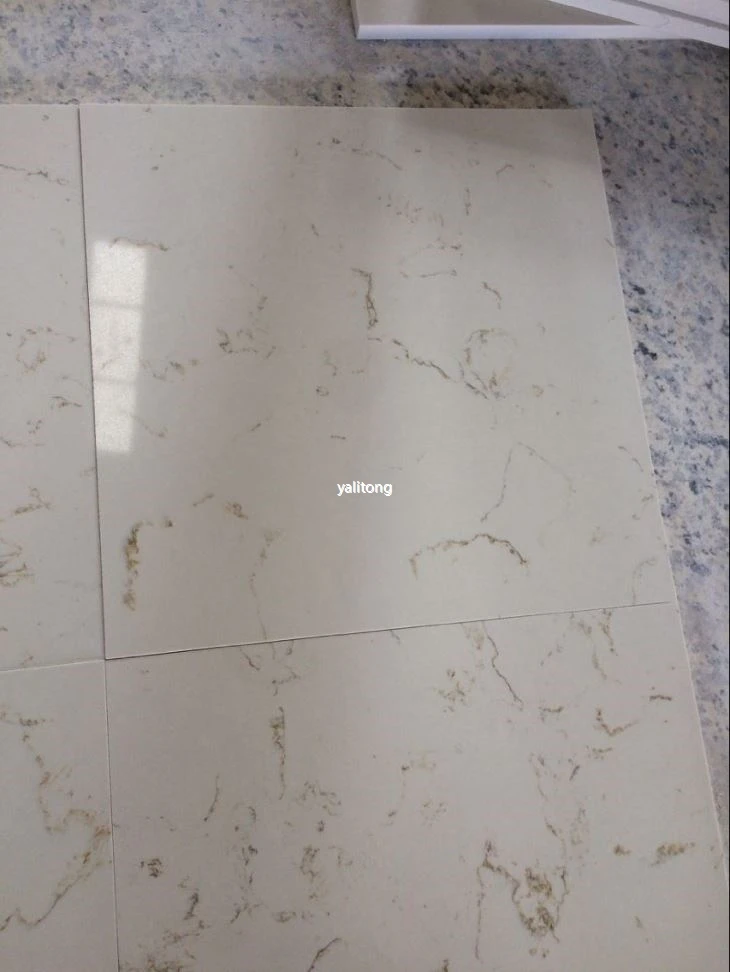
At our company, we offer a wide range of quartz tiles with different colors, patterns, and finishes to suit various design preferences. Some of our popular products include Grey and Black Quartz Flooring Tiles, Counter Top, Fantasy Brown Beige Quartz Tiles, and White Quartz Floor Tile.
These tiles are made with a high percentage of quartz, ensuring excellent scratch resistance. They are also carefully manufactured to meet the highest quality standards, so you can be confident in their performance.

Tips for Maintaining Scratch Resistance
To keep your quartz tiles looking their best and maintain their scratch resistance, here are some tips:
- Place doormats at entrances to prevent dirt and grit from being tracked onto the tiles.
- Use furniture pads under the legs of chairs and tables to prevent scratches from movement.
- Avoid dragging heavy objects across the tile surface.
- Clean up spills immediately to prevent staining and potential damage.
- Regularly sweep or vacuum the tiles to remove any dirt or debris.
Conclusion
In conclusion, quartz tiles are generally scratch-resistant, thanks to their high quartz content and the manufacturing process. However, their performance can be affected by factors such as the surface finish, installation, and maintenance. By choosing high-quality quartz tiles and following proper maintenance procedures, you can ensure that your tiles remain scratch-free and beautiful for many years.
If you are interested in purchasing quartz tiles for your next project, we would be happy to assist you. Our team of experts can help you choose the right tiles for your specific needs and provide you with all the information you need. Contact us today to start the procurement process and transform your space with our stunning quartz tiles.
References
- ASTM International. (2023). Standard Test Method for Abrasion Resistance of Organic Coatings by the Taber Abraser. ASTM D4060-19.
- Deer, W. A., Howie, R. A., & Zussman, J. (1992). An Introduction to the Rock-Forming Minerals. Longman Scientific & Technical.
- National Association of Home Builders. (2023). Quartz Countertops: A Buyer's Guide.