


How to stop outdoor granite tiles from being slippery
Jul 31, 2025
How to stop outdoor granite tiles from being slippery?
When buying granite tiles for outdoor use, preventing slipperiness starts with selecting the right type and finishes, as granite's natural texture and surface treatment are key to traction. Here's how to ensure your outdoor granite tiles stay slip-resistant:
1. Choose the Right Finish
Granite tiles come in various finishes, and some are inherently better for outdoor slip resistance:
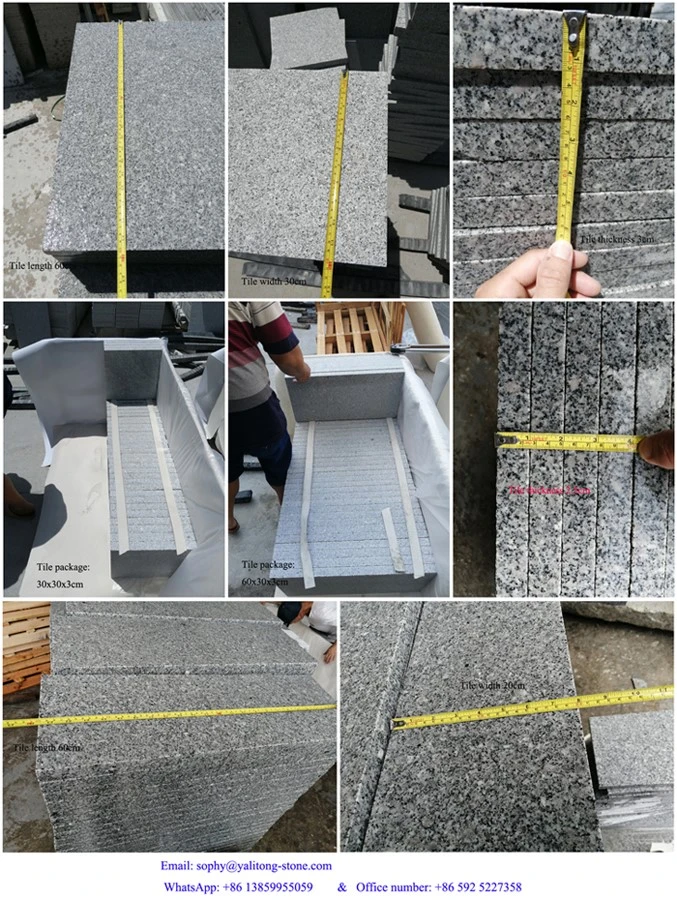
Flamed finish: This is the top choice for outdoor areas. The flaming process (exposing the tile to high heat) causes the surface to crack slightly, creating a rough, textured grip that enhances traction-even when wet.
Honed or brushed finish: These have a matte, less polished surface than glossy tiles. While smoother than flamed, they still offer more grip than polished options, making them suitable for covered outdoor spaces (e.g., patios with roofs).
Bushhammered finish: it is achieved through the use of a high impact machine or by hand using a masonry tool to uniformly pit the stone surface. Bush hammered finish provides a textured, roughened surface.
Avoid polished finishes: Polished granite has a smooth, reflective surface that becomes extremely slippery when wet-never use it for outdoor areas like pool decks, walkways, or driveways.
2. Opt for Textured or Tumbled Varieties
Look for granite tiles labeled as "textured" or "tumbled." Tumbled tiles undergo a process that softens edges and creates a naturally irregular surface, adding micro-grooves that improve traction. This is especially useful for high-moisture areas like around fountains or near swimming pools.
3. Check for Slip Resistance Ratings
Ask suppliers for the tile's Coefficient of Friction (COF) rating. For outdoor use, aim for a COF of 0.6 or higher (dry) and 0.5 or higher (wet)-these ratings indicate good slip resistance. Most flamed or textured granite tiles will meet or exceed these standards.
4. Consider Tile Size and Grout Lines
Smaller tiles (e.g., 12x12 inches) create more grout lines, which act as additional grip points. Pair them with sanded grout (coarser than unsanded) to further enhance traction between tiles.
5. Seal Properly (But Don't Over-Seal)
Granite is porous, so sealing helps resist stains and water absorption-but over-sealing can create a slippery film. Use a breathable, non-slip sealer designed for outdoor stone, and reapply it annually to maintain traction without compromising protection.
By prioritizing flamed, honed, or textured finishes, checking COF ratings, and considering tile size, you can ensure your outdoor granite tiles stay safe and slip-resistant, even in wet conditions.


