

What is the thermal conductivity of a stone slab?
Nov 12, 2025
Thermal conductivity is a fundamental property that significantly influences the performance and application of materials, including stone slabs. As a reputable stone slab supplier, understanding the thermal conductivity of different types of stone slabs is crucial for guiding customers in making informed decisions. In this blog, we will explore what thermal conductivity is, how it affects stone slabs, and the thermal conductivity characteristics of some common stone slabs.
What is Thermal Conductivity?
Thermal conductivity, denoted by the symbol λ (lambda), is a measure of a material's ability to conduct heat. It is defined as the quantity of heat (Q) that passes through a unit area (A) of a material per unit time (t) under a unit temperature gradient (ΔT/Δx). Mathematically, it can be expressed by Fourier's law of heat conduction:
[Q = - \lambda A\frac{\Delta T}{\Delta x}]
where Q is the heat transfer rate, A is the cross - sectional area through which heat is transferred, ΔT is the temperature difference across the material, and Δx is the thickness of the material. The negative sign indicates that heat flows from a higher - temperature region to a lower - temperature region.
The SI unit of thermal conductivity is watts per meter - kelvin (W/(m·K)). A high thermal conductivity value means that the material can transfer heat quickly, while a low value indicates that the material is a poor conductor of heat and can act as an insulator.
Factors Affecting the Thermal Conductivity of Stone Slabs
Several factors can influence the thermal conductivity of stone slabs:
- Mineral Composition: Different minerals have different thermal conductivities. For example, quartz has a relatively high thermal conductivity compared to calcite. Stone slabs with a high quartz content, such as granite, generally have higher thermal conductivity than marble, which is mainly composed of calcite.
- Porosity: Porous stones have lower thermal conductivity because the air trapped in the pores acts as an insulator. Stones with a dense structure, like some types of basalt, tend to have higher thermal conductivity as there are fewer air pockets to impede heat transfer.
- Moisture Content: Water has a higher thermal conductivity than air. When a stone slab absorbs moisture, its thermal conductivity can increase because the water fills the pores and provides a better pathway for heat transfer.
- Temperature: The thermal conductivity of most materials changes with temperature. In general, the thermal conductivity of stone slabs increases slightly with increasing temperature, although the relationship can be complex and depends on the specific mineral composition.
Thermal Conductivity of Common Stone Slabs
Let's take a look at the thermal conductivity of some common types of stone slabs:
- Granite: Granite is an igneous rock composed mainly of quartz, feldspar, and mica. Due to its high quartz content, granite typically has a relatively high thermal conductivity, ranging from about 2.5 to 3.5 W/(m·K). This makes granite suitable for applications where heat transfer is important, such as in kitchen countertops where it can quickly dissipate heat from hot pots and pans.
- Marble: Marble is a metamorphic rock composed primarily of calcite or dolomite. The thermal conductivity of marble is generally lower than that of granite, typically in the range of 2.0 to 2.5 W/(m·K). Its lower thermal conductivity makes it a good choice for flooring in areas where a cooler surface is desired, such as in bathrooms or foyers.
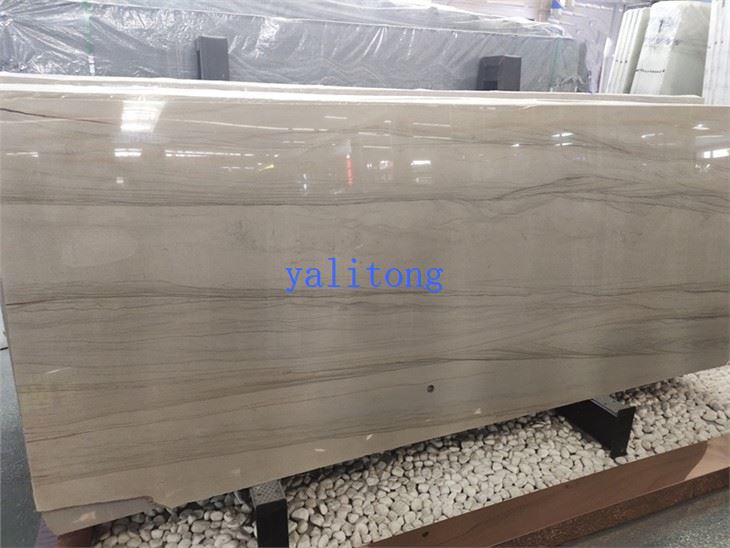
- Piano Grey Marble Slabs: This type of marble slab has a unique appearance and its thermal conductivity falls within the typical marble range. It can be used in both interior and exterior applications, and its relatively low thermal conductivity helps to maintain a comfortable temperature in the surrounding environment.
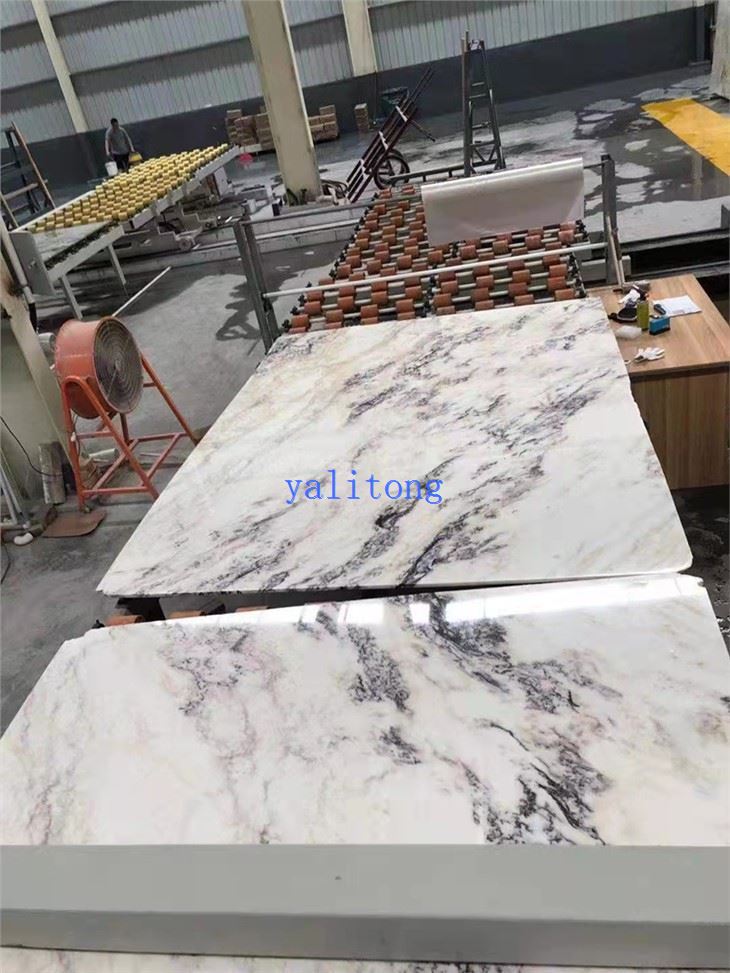
- China Violet Marble Slabs: With its beautiful violet color, this marble slab also has a thermal conductivity similar to other marbles. It is often used in high - end interior design projects, and its thermal properties contribute to the overall energy efficiency of the space.
- Limestone: Limestone is a sedimentary rock composed mainly of calcite. Its thermal conductivity is generally in the range of 1.5 to 2.5 W/(m·K), depending on its porosity and mineral composition. Limestone is commonly used in building facades and flooring, and its moderate thermal conductivity can help regulate indoor temperatures.
- Sandstone: Sandstone is a sedimentary rock composed of sand - sized grains of quartz or feldspar. Its thermal conductivity can vary widely, from about 1.0 to 2.5 W/(m·K), depending on the degree of cementation and porosity. Sandstone with a high porosity has a lower thermal conductivity and can be used as an insulating material in some cases.
Applications Based on Thermal Conductivity
The thermal conductivity of stone slabs plays a crucial role in their applications:
- Building Envelopes: For exterior walls and facades, stones with lower thermal conductivity can help reduce heat transfer between the interior and exterior of a building, improving energy efficiency. For example, using marble or limestone with relatively low thermal conductivity can help keep the building cool in summer and warm in winter.
- Flooring: In areas where foot traffic is high, such as commercial buildings or public spaces, stones with moderate thermal conductivity are preferred. They can provide a comfortable walking surface without being too cold or too hot. For example, granite floors can quickly dissipate heat from the feet, while marble floors can maintain a relatively cool temperature.
- Kitchen Countertops: Stones with high thermal conductivity, like granite, are ideal for kitchen countertops. They can quickly absorb and dissipate the heat from hot cookware, preventing damage to the countertop surface and reducing the risk of burns.
Importance of Considering Thermal Conductivity for Customers
When customers are choosing stone slabs for their projects, considering thermal conductivity is essential for several reasons:
- Energy Efficiency: Selecting stones with appropriate thermal conductivity can help reduce energy consumption for heating and cooling. This is especially important for large - scale commercial buildings and environmentally conscious projects.
- Comfort: The thermal properties of stone slabs can affect the comfort of the indoor environment. For example, using stones with low thermal conductivity for flooring can prevent the floor from feeling too cold in winter, while high - conductivity stones can quickly dissipate heat in areas prone to high temperatures.
- Durability: Understanding the thermal conductivity of stone slabs can also help prevent damage caused by thermal stress. For example, in areas with large temperature variations, stones with appropriate thermal conductivity can better withstand the expansion and contraction associated with temperature changes.
Conclusion
As a stone slab supplier, we recognize the importance of thermal conductivity in the selection and application of stone slabs. By understanding the factors that affect thermal conductivity and the thermal properties of different types of stone slabs, we can provide our customers with professional advice and high - quality products that meet their specific needs.
Whether you are looking for Piano Grey Marble Slabs for a luxurious interior project or China Violet Marble Slabs for a unique design, we can offer you a wide range of options with detailed information on their thermal conductivity.
If you are interested in purchasing stone slabs for your project, we encourage you to contact us for a consultation. Our team of experts will be happy to assist you in selecting the most suitable stone slabs based on your requirements and preferences.
References
- Incropera, F. P., DeWitt, D. P., Bergman, T. L., & Lavine, A. S. (2007). Fundamentals of Heat and Mass Transfer. John Wiley & Sons.
- Kaviany, M. (1995). Principles of Heat Transfer in Porous Media. Springer.