

What is the sound absorption of Quartz Slab?
Aug 05, 2025
Sound absorption is a crucial property in various architectural and design applications, influencing the acoustic quality of a space. As a leading supplier of Quartz Slab, I've witnessed firsthand the growing interest in understanding the sound - absorbing capabilities of this versatile material. In this blog, we'll delve into what sound absorption of Quartz Slab entails, its significance, and how it can be applied in different settings.
Understanding Sound Absorption
Sound absorption refers to the process by which a material reduces the intensity of sound waves passing through or hitting it. When sound waves encounter a surface, part of the energy is reflected, part is transmitted, and part is absorbed. Materials with high sound - absorbing properties convert the sound energy into heat energy, thereby reducing the overall sound level in a space.
The sound - absorbing ability of a material is typically measured by its Noise Reduction Coefficient (NRC). The NRC is a number between 0 and 1, where 0 means the material reflects all sound (no absorption), and 1 means the material absorbs all sound. A material with an NRC of 0.5, for example, absorbs 50% of the sound energy that hits it.

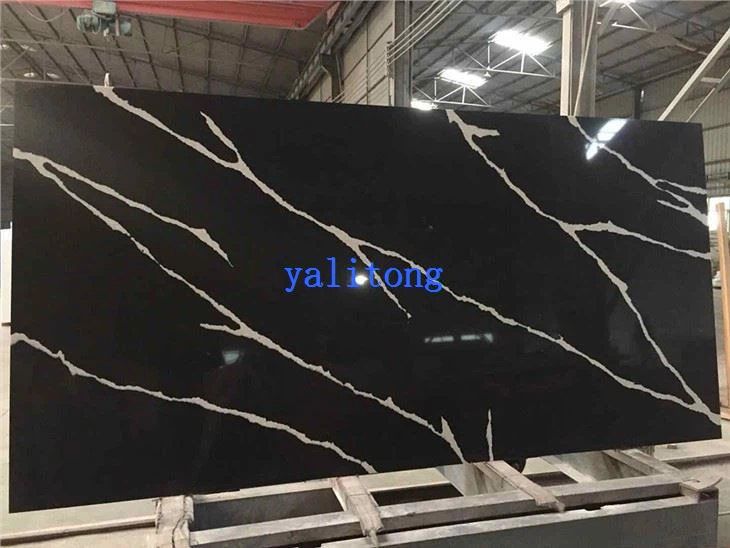
Sound Absorption of Quartz Slab
Quartz slabs are engineered stone products made from crushed quartz crystals, resins, and pigments. Their dense and non - porous nature gives them unique physical properties, which also influence their sound - absorbing characteristics.
In general, quartz slabs are not considered highly sound - absorbing materials. Their smooth and hard surfaces tend to reflect sound rather than absorb it. The NRC of a typical quartz slab is relatively low, usually below 0.2. This means that most of the sound energy hitting the quartz slab will be reflected back into the room, which can contribute to a more reverberant acoustic environment.
However, the sound - absorbing performance of quartz slabs can be affected by several factors:
Surface Texture
A quartz slab with a rougher surface texture can have slightly better sound - absorbing properties compared to a smooth one. The irregularities on the surface can disrupt the sound waves, causing them to scatter and lose some of their energy. For example, a quartz slab with a honed or textured finish may absorb a bit more sound than a polished slab.
Installation Method
The way a quartz slab is installed can also impact its sound - absorbing ability. If there are gaps or spaces behind the slab, sound waves can penetrate these areas and be absorbed to some extent. Additionally, using a sound - absorbing underlayment during installation can enhance the overall sound - absorbing performance of the quartz slab.
Composite Structure
Some advanced quartz slab products may incorporate sound - absorbing layers or materials within their composite structure. These layers can help to dampen the sound waves and increase the overall sound - absorbing capacity of the slab.
Applications and Considerations
Despite their relatively low sound - absorbing properties, quartz slabs still have a wide range of applications in both residential and commercial settings.
Kitchens
In kitchens, quartz slabs are a popular choice for countertops. While they may not contribute significantly to sound absorption, their durability, stain resistance, and aesthetic appeal make them an ideal material. To improve the acoustic environment in the kitchen, other sound - absorbing materials such as acoustic ceiling tiles or wall panels can be used.
Bathrooms
Quartz slabs are also commonly used in bathrooms for vanity tops and shower walls. Similar to kitchens, the focus in bathrooms is often on the visual and functional aspects of the material. However, if a quieter bathroom environment is desired, additional sound - absorbing measures can be taken.
Commercial Spaces
In commercial spaces such as offices, restaurants, and retail stores, the acoustic quality is an important consideration. Quartz slabs can be used for various surfaces, such as reception desks, display counters, and wall claddings. To compensate for their low sound - absorbing properties, designers can combine quartz slabs with other sound - absorbing materials like fabric wall coverings or acoustic partitions.
Our Quartz Slab Products
As a supplier of quartz slabs, we offer a wide range of products to meet different customer needs. Our Man - made Artificial White Quartz Surface with Tiny Grain features a unique aesthetic with tiny grains, providing a modern and elegant look for any space. The Black Calacatta Quartz offers a luxurious and sophisticated appearance, inspired by the natural beauty of Calacatta marble. And our Artificial Calacatta White Quartz is a popular choice for those who want the classic look of Calacatta without the maintenance issues of natural stone.
While these products may not be the most effective sound - absorbing materials on their own, they can be part of a comprehensive design solution that takes into account the overall acoustic requirements of a space.
Contact Us for Procurement
If you're interested in our quartz slab products and would like to discuss your specific needs, we'd be more than happy to assist you. Whether you're an architect, designer, contractor, or homeowner, we can provide you with detailed product information, samples, and pricing. Contact us today to start the procurement process and bring your project to life.
References
- "Acoustics for Architects" by David E. Rogers
- "The Handbook of Sound Absorption" by Trevor Cox and Peter D'Antonio
- Technical literature from quartz slab manufacturers